
Hiking in Nepal
Nepal is one of the world's most remarkable destinations for hiking. Although the country is relatively small, it contains an extraordinary variety of landscapes, from the warm plains of the Terai to the green hills of the middle mountains and the enormous peaks of the Himalayas. For travelers who enjoy walking, Nepal offers opportunities ranging from gentle village hikes lasting a few hours to demanding high-altitude journeys lasting several weeks. Along the way, hikers can experience dramatic mountain scenery, traditional villages, ancient monasteries, diverse wildlife, and the hospitality of communities whose lives are closely connected with the mountains. For many people, hiking in Nepal is associated primarily with Mount Everest. However, the country's appeal extends far beyond the world's highest mountain. Regions such as Annapurna, Langtang, Manaslu, Mustang, and the Everest area each have their own landscapes, cultures, and challenges. A trek through the Himalayas is not simply a physical journey. It can also be a cultural experience, an opportunity to disconnect from everyday routines, and a chance to understand the relationship between people and the natural environment.
Overview
Nepal is one of the world's most remarkable destinations for hiking. Although the country is relatively small, it contains an extraordinary variety of landscapes, from the warm plains of the Terai to the green hills of the middle mountains and the enormous peaks of the Himalayas. For travelers who enjoy walking, Nepal offers opportunities ranging from gentle village hikes lasting a few hours to demanding high-altitude journeys lasting several weeks. Along the way, hikers can experience dramatic mountain scenery, traditional villages, ancient monasteries, diverse wildlife, and the hospitality of communities whose lives are closely connected with the mountains.
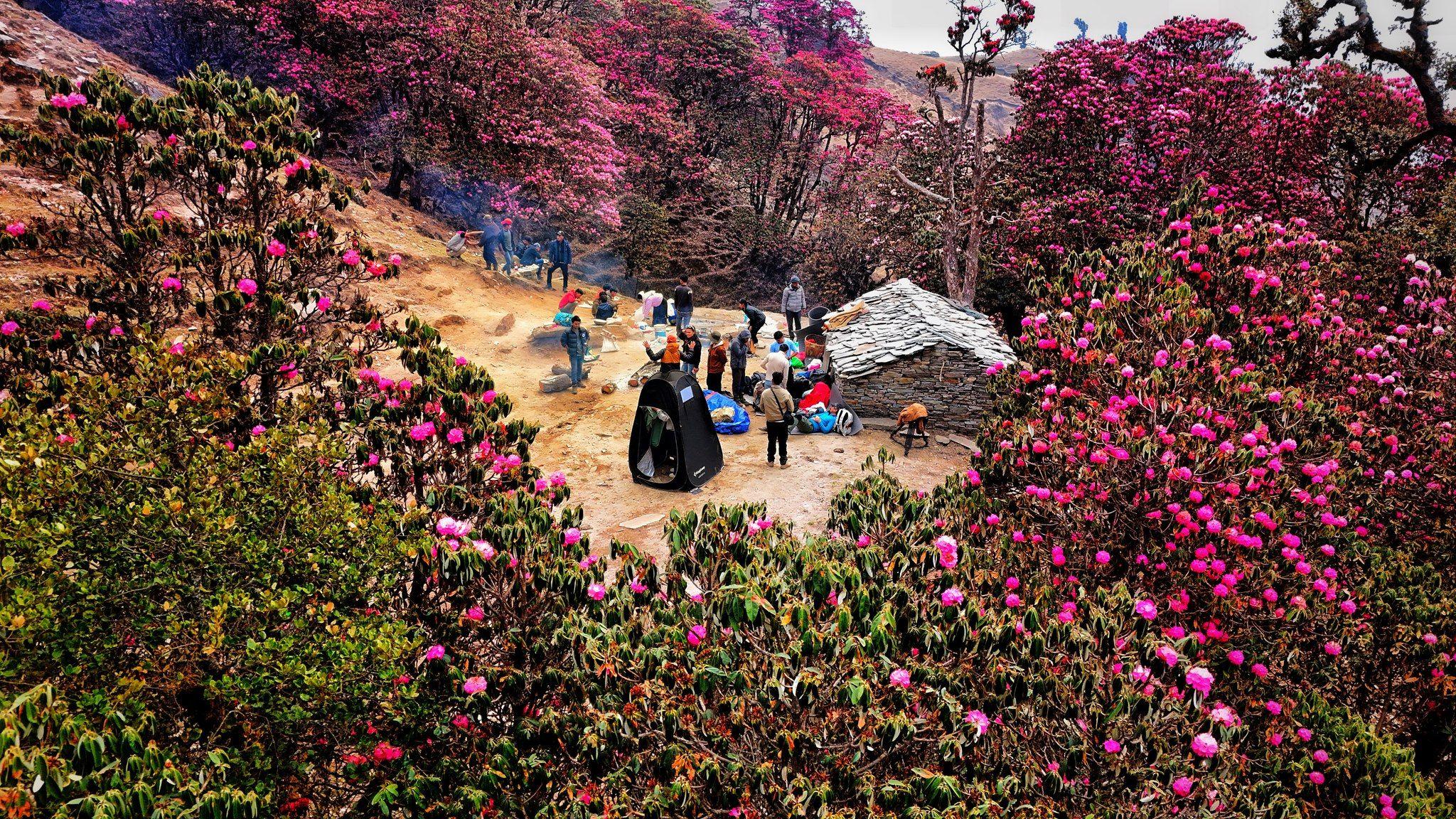
For many people, hiking in Nepal is associated primarily with Mount Everest. However, the country's appeal extends far beyond the world's highest mountain. Regions such as Annapurna, Langtang, Manaslu, Mustang, and the Everest area each have their own landscapes, cultures, and challenges. A trek through the Himalayas is not simply a physical journey. It can also be a cultural experience, an opportunity to disconnect from everyday routines, and a chance to understand the relationship between people and the natural environment. Why People Hike in Nepal One of the main reasons people hike in Nepal is the scenery. The Himalayas provide an environment that is difficult to find anywhere else. Huge snow-covered mountains rise above deep valleys, while rivers rush through rocky gorges far below. Forests of pine, oak, rhododendron, and bamboo cover many lower slopes. In spring, rhododendrons can transform the hillsides with brilliant red, pink, and white flowers.
The mountains are only part of the attraction. Nepal's villages are equally important to the hiking experience. Trails often pass through small settlements surrounded by fields and forests. Stone houses, prayer flags, water mills, temples, monasteries, and traditional courtyards give hikers an opportunity to observe everyday life in mountain communities.
Another reason to hike in Nepal is the sense of adventure. Walking for several days through a mountainous environment can be very different from ordinary travel. There may be no roads in some areas, and hikers must depend on their own preparation and endurance. Each day brings a new destination, a different view, and sometimes unexpected challenges.
Hiking can also provide an opportunity for personal reflection. Away from traffic, offices, crowded streets, and constant digital communication, people often find that the rhythm of walking encourages them to slow down. A long day on a mountain trail can be physically tiring, but it can also be mentally refreshing.
The Best Seasons for Hiking Choosing the right season is one of the most important parts of planning a hike in Nepal. The main trekking seasons are generally associated with autumn and spring, although conditions vary according to elevation and region.
Autumn, particularly after the monsoon, is popular because the atmosphere is often clear and mountain views can be excellent. Temperatures at lower and middle elevations can also be comfortable for walking.
Spring is another attractive season. The weather is generally suitable for trekking, and forests in many areas come alive with flowers. Rhododendrons are especially beautiful in the hills.
The monsoon season brings heavy rainfall to much of Nepal. Trails can become muddy and slippery, and clouds may obscure mountain views. However, not every region receives the same amount of rain. Some areas in the rain shadow of the Himalayas, such as parts of Mustang, can be suitable for trekking during periods when other regions are wetter.
Winter can be cold, particularly at high elevations. Snow may make some high passes difficult or impossible to cross. Nevertheless, lower-elevation hikes can still be enjoyable during winter, especially on clear days.
Because mountain weather can change rapidly, hikers should always check current local conditions before starting a trek.
Hiking Around Kathmandu Hiking in Nepal does not necessarily require traveling deep into the Himalayas. The Kathmandu Valley and its surrounding hills contain numerous opportunities for day hikes.
Hikes around places such as Shivapuri, Nagarkot, Phulchowki, and other hill areas can provide beautiful views and opportunities to experience rural landscapes without committing to a long trek.
These shorter hikes are especially useful for travelers with limited time or for people who want to become accustomed to walking in Nepal before undertaking a longer journey. They can also reveal a side of the country that is often missed by visitors who focus exclusively on major trekking routes.
Hiking Around Pokhara Pokhara is another major center for hiking and outdoor tourism. Located beside Phewa Lake and surrounded by hills and mountains, the city provides easy access to numerous trails.
Short hikes can lead to viewpoints overlooking the lake and surrounding valleys. Longer routes enter villages and forests and provide views toward the Annapurna range.
Pokhara is particularly appealing because travelers can combine hiking with other activities. After spending days on a mountain trail, visitors can return to the city, enjoy its restaurants and lakeside atmosphere, and recover before another adventure
Dates & Availability
No fixed dates available
Price on Request
Contact us for pricing